
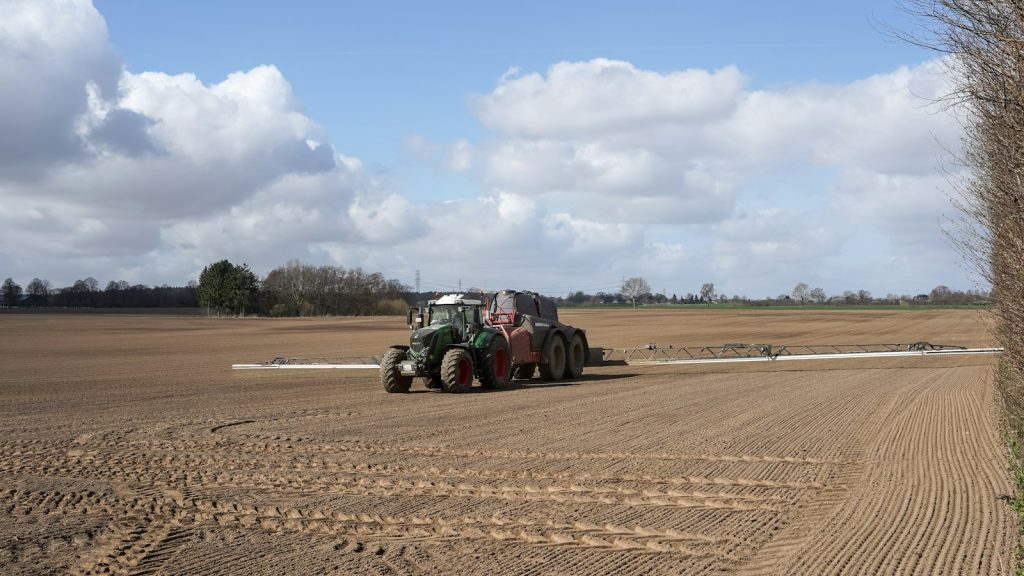
Oil prices grab the headlines, but some of the most lasting damage from the war with Iran may show up in the world’s fields. The Middle East is one of the largest suppliers of the fertilizers that modern farming depends on, and disruption around the Strait of Hormuz since late February has sent costs soaring. As farmers make decisions for autumn and winter planting, the question is how much less fertilizer they can afford to use, and what that means for harvests next year.
Why the Gulf matters for farming
According to an analysis by the International Food Policy Research Institute (IFPRI), the Middle East provides around one-third of global urea exports, the world’s most widely used nitrogen fertilizer. The region is also a major source of sulphur, used to make phosphate fertilizers, and Saudi Arabia supplies about a fifth of the world’s phosphate.
- An estimated 3.9 million tonnes of Gulf fertilizer exports were suspended in the first months of the conflict, around 30 percent of the region’s annual exports.
- Urea prices roughly doubled within weeks of the strait’s effective closure, before easing somewhat in May when China lifted its urea export ban.
- In Brazil, which imports almost all of its fertilizer, local prices jumped more than 35 percent in the first two weeks of the conflict.
- Production was temporarily halted at plants in Bahrain, Iran and Qatar.
The planting season at risk
IFPRI warned that the biggest risks would come in late summer and autumn. Farmers in the United States had enough supply for spring, but autumn applications were less certain. In India, supplies for the summer kharif crop were adequate, while availability for the winter rabi season was uncertain. Farmers in East and sub-Saharan Africa, who obtain about a third of their fertilizer from the Gulf, are among the most exposed.
When fertilizer is expensive, many farmers apply less, and lower application rates usually mean lower yields. IFPRI also noted that restarting a fertilizer plant after a shutdown typically takes five to eight weeks, and structural damage can take years to repair. Even under an optimistic scenario, it said markets would not normalise before the end of 2026, and a prolonged conflict could extend the crisis into 2028.
An affordability squeeze for farmers
Crop prices have risen, but more slowly than input costs, leaving many growers caught in between. FAO’s latest index shows cereal prices up 17 percent on a year earlier, which helps, but higher diesel prices add to the costs of running machinery and transporting harvests.
The human cost
Food inflation hits poorer households hardest. IFPRI estimates that consumer prices in low- and middle-income countries rose by about 3.6 percent following the start of the conflict, compared with about 2.5 percent in high-income economies. Low-income households can spend around half of their income on food, and nearly 300 million people faced high levels of food insecurity in 2025, according to the Global Report on Food Crises.
What could help
- Targeted support for smallholder farmers, especially in import-dependent regions.
- Faster adoption of practices that reduce fertilizer needs, such as precision application and biofertilizers.
- Protecting funding for humanitarian food assistance as costs rise.
For more on food prices and supply chains, visit our Food section.