
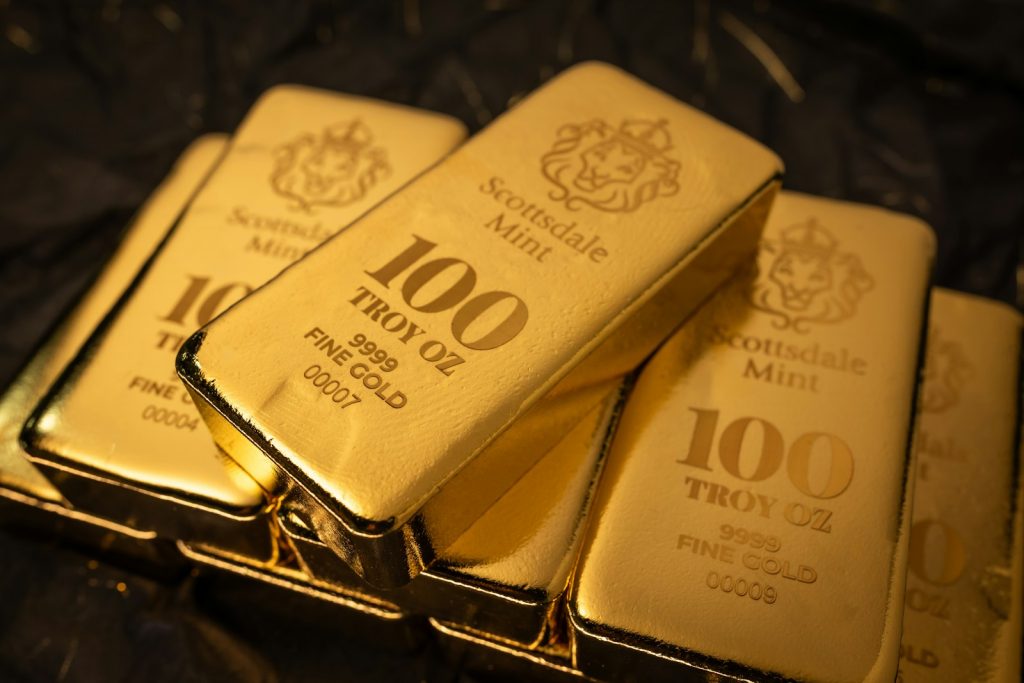
Gold is caught in a tug-of-war. On one side sit war, inflation and market volatility, all classic reasons to own the metal. On the other are the highest US bond yields in more than two decades and a Federal Reserve that has started raising rates again. The result, so far this autumn, has been a market that is holding up but no longer racing ahead.
Where prices stand
Gold traded at about $4,169 an ounce on the morning of October 9, according to Fortune’s daily price tracker, up roughly $52, or 1.26 percent, from the previous day. That still left it about 5.6 percent below its level a month earlier, when it changed hands near $4,418, and only around 2.8 percent higher than a year ago.
Other precious metals were mixed at the same time:
- Silver: about $60 an ounce
- Platinum: about $1,672 an ounce
- Palladium: about $1,145 an ounce
Why higher yields matter for gold
Gold pays no interest. When safe government bonds offer a strong return, the opportunity cost of holding bullion rises, and some investors rotate out. That dynamic has been powerful this autumn. The 10-year Treasury yield climbed above 5.35 percent on October 7, its highest since 2002, and inflation-adjusted yields have jumped by roughly a full percentage point since January.
There are signs that official holders are adjusting too. Market reports this month said Kazakhstan had begun selling gold as US yields rose, a reminder that central banks, which bought heavily in recent years, can also be sellers.
What is still supporting prices
- Geopolitical risk: the war with Iran and repeated attacks on shipping in the Strait of Hormuz keep demand for safe-haven assets elevated.
- Inflation: US consumer prices rose 3.4 percent in the year to August, driven by energy, and inflation expectations have climbed.
- Diversification: many advisers continue to recommend a modest gold allocation to balance portfolios during volatile periods.
Physical gold or paper gold?
For individual investors, the choice between owning bars and coins or buying exchange-traded funds remains a live debate. Advisers quoted by Fortune note that ETFs make it easier to rebalance a portfolio, while physical metal can come with wide and variable spreads between buying and selling prices, plus storage and insurance costs.
Long-run history is worth remembering as well. From 1971 through 2024, US stocks returned an average of about 10.7 percent a year compared with about 7.9 percent for gold, which is why most planners treat gold as a hedge rather than a core holding.
What to watch
- The September US inflation report on October 14.
- Remarks from Fed officials ahead of the October 27–28 policy meeting.
- Any ceasefire talks or escalation involving Iran, which could swing safe-haven demand quickly.
Follow precious metals, currencies and rates in our Finance section.
This article is for information only and is not investment advice.