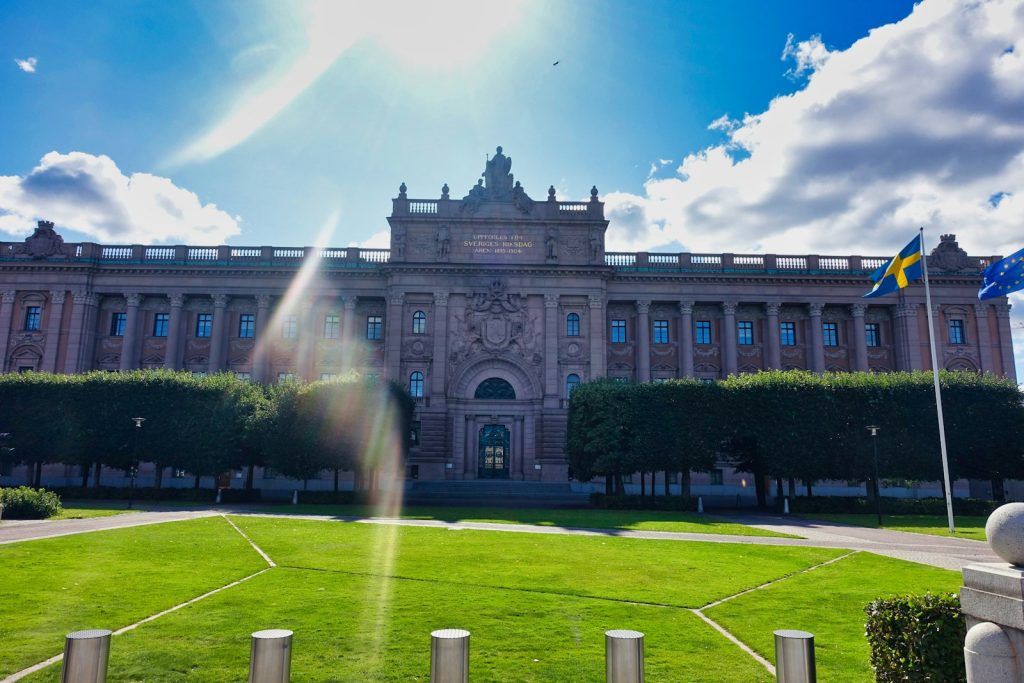
Sweden is still without a new government three weeks after a knife-edge election. On October 2, Riksdag Speaker Andreas Norlén asked Magdalena Andersson, leader of the Social Democrats, to try again to build a government. Her first attempt collapsed at the end of September.
Norlén said the “underlying conditions” had not changed since he first gave Andersson the task. She must report back by October 12, when the Riksdag is due to vote on a prime minister.
A narrow election result
The September 13 election gave the four opposition parties 176 of 349 seats against 173 for the outgoing Tidö bloc. Only about 50,000 votes separated the two sides. Prime Minister Ulf Kristersson resigned on September 17 and now leads a caretaker government.
- Social Democrats: 99 seats
- Moderates: 70
- Sweden Democrats: 62
- Left Party: 30
- Centre Party: 25
- Christian Democrats: 22
- Greens: 22
- Liberals: 19
Why the first attempt failed
On paper, the centre-left has a majority. In practice, its four parties disagree on who should sit in government.
- The Left Party insists on being included in the cabinet.
- The Centre Party, led by Elisabeth Thand Ringqvist, refuses to join or back a government that gives influence to the far left or far right.
- The Greens were angered when the Left Party helped re-elect Norlén as speaker over the Social Democrats’ candidate on September 28.
That same day, Andersson returned her mandate, saying there was “currently no possibility” for her to form a government. The Social Democrats called the Left Party’s speaker vote a betrayal. The Left Party denied breaking any agreement.
How Sweden picks a prime minister
Sweden uses “negative parliamentarism”. A candidate becomes prime minister unless an absolute majority of 175 MPs votes against them. That rule allowed minority governments in the past, but it also means the right-wing parties could block Andersson if they vote together with any defector.
If the Riksdag rejects four candidates in a row, a snap election must be held within three months.
What to watch
The main options now include a Social Democrat-only minority government tolerated by the Left and Centre parties, or a broader deal that keeps the Left Party out of ministries. Each option demands a compromise that one partner has so far refused.
Kristersson has said he would govern again if a majority existed, but his bloc is three seats short. Whatever emerges will face a tough budget season and a divided parliament.
Follow the latest from Stockholm and beyond in our Politics section.