
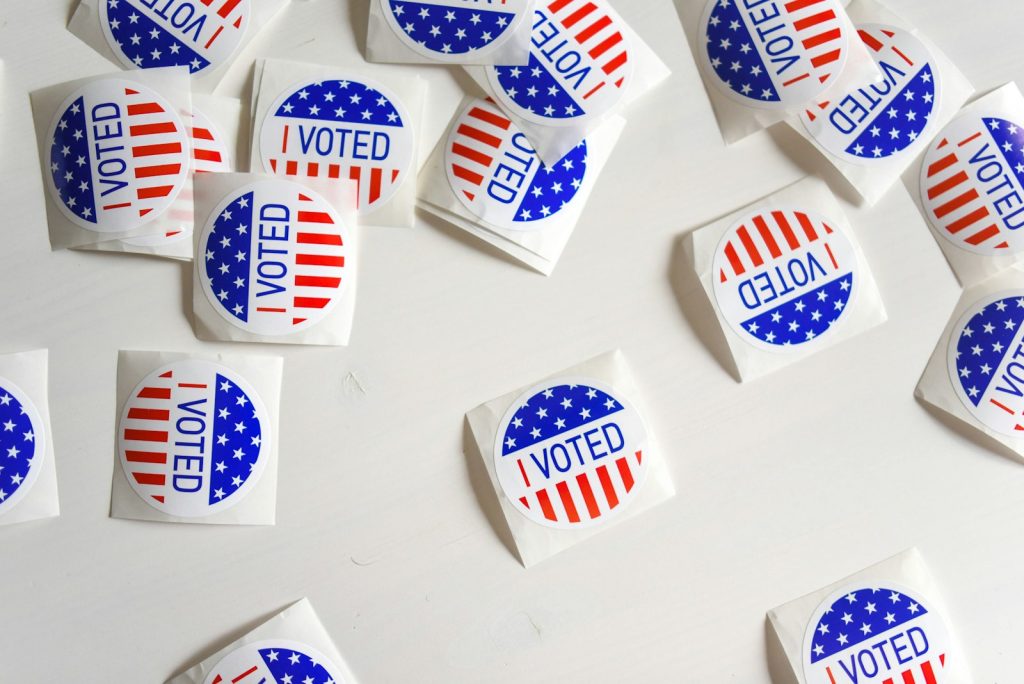
Americans vote on November 3 in midterm elections that will decide control of Congress for the final two years of President Donald Trump’s second term. With polling, redistricting fights and an overseas war all in the mix, this cycle has more moving parts than most. Here is a clear guide to what is on the ballot and what could tip the outcome.
What is on the ballot
- House of Representatives: all 435 voting seats.
- Senate: 35 of 100 seats, including 33 regularly scheduled contests and special elections in Florida and Ohio for seats vacated in 2025 by Marco Rubio and JD Vance. Appointed Republicans Ashley Moody and Jon Husted hold those seats until voters decide.
- Governors: 36 states and three territories elect governors, and 15 states have term-limited incumbents.
- Everything else: attorneys general, secretaries of state, state legislatures, ballot measures in 37 states and at least 22 mayoral races in the country’s 100 largest cities.
Where the polls stand
Republicans hold the Senate after flipping four Democratic seats in 2024. Nationally, the environment has moved toward Democrats: as of October 9, the polling average on the generic congressional ballot showed Democrats ahead by roughly 8.4 points. Trump’s approval rating fell to 32 percent in one Reuters/Ipsos poll, the lowest of his political career, and Democrats won the 2025 governor races in New Jersey and Virginia by wider margins than expected.
Polling leads do not translate neatly into seats, however, and that is where the new maps come in.
Redistricting has redrawn the battlefield
Several states changed their congressional maps in the middle of the decade, an unusual step. Missouri, North Carolina and Texas redrew districts after Trump urged Republican-led legislatures to act, while courts ordered new lines in Ohio and Utah. California answered with Proposition 50, and other Democratic-led states pursued similar responses. In late September the Supreme Court left Missouri’s 2022 map in place for this election.
The biggest legal shift came in April, when the Supreme Court’s decision in Louisiana v. Callais weakened Voting Rights Act protections for majority-minority districts. The New York Times estimated that change could move up to 12 House seats toward Republicans over time.
The races to watch
- Georgia and Michigan: Democratic-held Senate seats in states Trump carried in 2024.
- Maine: the only Republican-held Senate seat in a state Kamala Harris won.
- Michigan and Iowa: Republican candidates Mike Rogers and Ashley Hinson are in close races and have distanced themselves from the Iran war.
- Kansas: an unexpectedly competitive Senate contest.
- The House: 16 Democrats represent districts Trump won, while eight Republicans hold seats Harris carried.
The issues voters are weighing
Cost of living dominates. Gasoline prices, inflation, healthcare and tariffs sit at the top of voters’ concerns, and the war with Iran that began on February 28 has pushed fuel costs higher. Opposition to new AI data centers has also become a local flashpoint, with several September polls finding that roughly seven in ten Americans would oppose one in their own community. Immigration enforcement remains a major theme, and polling suggests Hispanic voters have moved back toward Democrats after shifting right in 2024.
Rules and security in the background
The SAVE America Act, which would have required documentary proof of citizenship to register, passed the House in March but stalled in the Senate in June. In September, the Supreme Court blocked an administration plan to screen mail-in ballots through the Postal Service. US intelligence officials have warned that Russia is running covert online influence campaigns, and that Iran may be doing the same.
The bottom line
National numbers favour Democrats, but redrawn maps and a handful of close Senate races mean control of both chambers is still in play. Keep up with every development in our Politics section, and read how campaigns are spending in our Marketing coverage.